Third Text
BOOK REVIEW: ‘UnMyth: Works and Worlds of Mithu Sen’, edited by Irina Aristarkhova
Dilpreet Bhullar on a monograph on the multimedia artist Mithu Sen, published by Mapin Publishers, Ahmedabad in 2024: "... Mithu Sen exemplifies how reappropriation of myth challenges the hegemonic discourses around identity, language and body"
19 December 2025
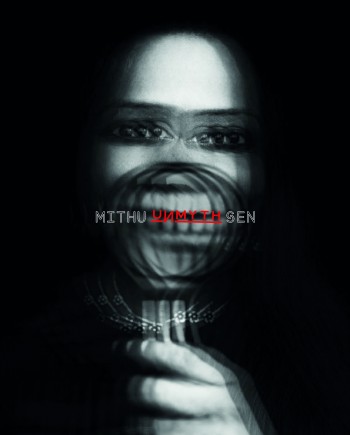
The discourse on constructed femininity is embroiled in the labyrinth of myth to project the woman’s body as a site where broader societal anxieties around sexuality, power and order are nurtured, navigated and negotiated. Myth here is not shackled as a relic but its epistemic nodes illuminate a contemporary narrative mechanism: a resurgence through the fractures of modernity and neoliberal rationality to perpetuate gendered identities. Within this framework of myth, as both regulatory and resistant, the artist Mithu Sen exemplifies how reappropriation of myth challenges the hegemonic discourses around identity, language and body. The use of ‘un’ as a linguistic tool in the title of this monograph, edited by Irina Aristarkhova, is an act of rebellion to critique lived realities and reclaims the space of ambivalence and vulnerability. Sen’s artistic practice has long thrived on an elusive position in the landscape of contemporary South Asian and global conceptual art. The prefix ‘un’, as an academic conceit, is an extension of Sen’s practice, which includes poetry, performative interventions, installations, drawings and videos, that cultivates ambivalence as an ethical stance and linguistic breakdown as an epistemological strategy. While inhabiting and disrupting institutions, philological and identity-based structures, Sen unpacks their limits, hypocrisies and violence. UnMyth is more than a survey of an artist’s oeuvre; it is a philosophical engagement with the politics of form, authorship, meaning and desire. The monograph is organised around what the editor calls the ‘five pillars’ of Sen’s practice – ‘Mything’, ‘Unlanguage’, ‘Radical Hospitality’, ‘Untaboo Sexuality’ and ‘Contract’. These pillars, as conceptual frameworks and curatorial scaffolds, enable this assemblage of artworks and essays. The essays by, in order of appearance, Sushmita Chatterjee, Karin Zitzewitz, Irina Aristarkhova, Nancy Adajania and Max Delany situate Sen’s work within intersecting discourses of feminist psychoanalysis, critical language theory, performance studies and postcolonial critique.

UnMyth: Works and Worlds of Mithu Sen, edited by Irina Aristarkhova, pp 18–19, reproduced courtesy of the publishers
The opening essay ‘Unmithu’s Politics: lingual anarchy and playful undoings’ by Chatterjee explores the expanse of illegible script, invented syntax and poetic miscommunication, which are used by Sen to derange the violence of colonial linguistics. The language negates stylistic limitations and catapults itself into a position of political defiance of structures that govern meaning-making within the framework of poststructuralist critiques of language. To align Sen’s practice of a lingual anarchy within the long theoretical lineage of postcolonial deconstruction, Chatterjee revisits the works of Jacques Derrida, Gayatri Spivak, Judith Butler and Edward Said, to name but a few. The essay opens a window whereby it is suggested that the artist’s practice has been established on grounds levelled by the twentieth-century philosophers-cum-theoreticians who have dismantled the synchronised grammar of the linguistics to (re)draw its inherited flaws linked to the supremacy of capitalism, gender-based identity and technology. The declaration made by Sen, ‘I am a Poet’, quoted by Chatterjee, is the first step towards the terrain of a fall: a plummeting linearity of words that exudes the debacle of the given world. Additionally, Adajania in her essay ‘Glitch Tongue: savaging the civilized’ affirms that ‘Sen’s three-decade-long art practice hinges on the figure of the thwarted poet’. Unlike the discourse on hybrid language, pioneered by the postcolonial scholar Homi Bhabha, [1] Sen abandons the cross-fertilisation of philological logic in an effort to dismiss any possibility of an aura of purity around language, in favour of incomprehensibility.
Affiliated with a rich linguistic culture, Bengali, Sen’s love for poetry is finely accounted in the monograph. The artist’s recourse to the habitat of poetry is identified by both Chatterjee and Adajania in the time when she finds herself relocated to New Delhi from Santiniketan in 1997. This changed reality lent a prism for Sen to make herself acquainted with the lingua franca English together with the dominant tongue Hindi, while retaining her native tongue, Bangla. Yet, this displacement was not a smooth ride with the language of Empire. The alienation experienced by Sen nudged her to invent language beyond the brackets of conception. Situated within this performative declaration, in the hands of Sen poetry becomes an invitation to the viewers to gauge the disassembly of the sanctity of linguistic coherence. Both works, an installation-cum-book of poetry I am a poet (2013) and unedited book Poem Decline (2014), referred to by Adajania and Chatterjee respectively, are an enactment of a fundamental reconfiguration of poetic expression through conceptual strategies of visual and image. Here, Sen reclaims the role of the poet not as a custodian of syntactic order but as a provocateur of linguistic entropy. The decline of legibility is not a lamentation but a tactic. In other words, the edifice of collapse is generative: an opaque visual swath of anti-poem that demands spectatorship rather than comprehension. Pertinent to the crucial idea of illegibility, Adajania asks about the joint ownership of this non-linguistic communication across the lopsided relationship between speaker and receptor. The necessity of an artistic intervention to articulate a particular meaning within a ‘particular scenario’ is complicated when situated within the pillar of radical hospitability addressed in another essay by the editor of this monograph.
If the persona of a poet is recurrently emphasised to define Sen’s practice, she is, with equal fervour, also personified as a performative trickster. The porous language of poetry is a form that enables play with words, while the prankster parodies the production of knowledge systems: the duality facilitates the viewer to pause and reflect on what lies beyond the scope of what is presented. As a jester in her performative work UnmythU: UnKIND(s) Alternatives (2018), Sen engages with the tensions between human subjectivity and machinic intelligibility as a way to further the questions probed in her earlier work, which coincides with the advent of AI interfaces such as Amazon’s Alexa. In UnmythU, she constructs a speculative lexicon: an idiolect that undoes the normative cognition of language, positioning herself against the codified logic through which AI systems interpret the world. Within this context, Sen’s artistic intervention contests the neoliberal grammar of AI, where responses are commodified as signs of intelligence. The title itself, a deliberate linguistic play on her first name Mithu and ‘myth’, invokes performative disruption of inscription. Sen underscores the socio-cultural economies at stake in human–machine interactions. Towards this end, it hints at the ‘unkind’ ‘alternatives’: ontologies that do not comply with the systems of optimisation.

UnMyth: Works and Worlds of Mithu Sen, edited by Irina Aristarkhova, pp 128–129, reproduced courtesy of the publishers
How does Sen translate the performances, rooted in the deconstruction of authorship and enacted within institutional settings of museums or galleries, into the textual documentation of a monograph? In this monograph, the essays are interpersed within a fictional interview format conducted by a polymorphous cast of interlocutors ranging from historical and mythological figures to AI-generated entities, alongside Sen herself. This becomes a subversion of the traditional artist interview in order to raise the central question: Who is the ‘Mithu Sen’ being narrated into existence? The dialogic performance traverses a broad spectrum of intellectual and temporal fields. Figures such as Ritwik Ghatak, Fernando Pessoa, Sappho, Draupadi, Akka Mahadevi, Medusa, Sylvia Plath, Bhupen Khakhar, Sunayani Devi, B R Ambedkar, Marcel Duchamp, Adolf Hitler, Sophie Calle, Banksy, Nam June Paik, Alexa, Jacques Derrida, Zaha Hadid, Hans Ulrich Obrist, Adrian Piper, Gayatri Chakravorty Spivak, Mr Bean, Jibanananda Das, Andrei Tarkovsky, Kamala Das, NourbeSe Philip, Sukumar Ray, Stephen Hawking and Immanuel Kant are brought into discursive play. By engaging with this eclectic archive of thinkers, artists, mythic beings and technology, Sen performs a radical act of rearrangement as a way to foreground the interdisciplinary range and conceptual fluidity of her practice.

UnMyth: Works and Worlds of Mithu Sen, edited by Irina Aristarkhova, pp 172–173, reproduced courtesy of the publishers
Sen reimagines subjectivity through a multiplicity of invented voices: Me Too, Meet U, Me Two, Meat U, Myth U – all homophonic derivations of her first name. These alter egos act as performative avatars, and enable her to simultaneously inhabit and parody the roles of confessor, provocateur and critic. The interview as a polyphonic event holds the proposition for a refusal to confine oneself within the brackets of biographical determinism. A run of imagination endows her with the liberty to explore the subjects of language, humour, violence, architecture, poetry and power with a spark of intellectual rigour. The interview thus enacts a performative inquiry: a reflection of the conceptual strategies she employs in built spaces of art. Through dialogues staged within the pages of the monograph, Sen reclaims the authority to self-narrate, while simultaneously destabilising the very premise of a singular self.
Entwined with Chatterjee and Adajania’s biographical narrative of Sen’s new home in Delhi, Zitzewitz’s essay ‘The Precise Calibration of Desire’ maps this moment through her engagement with upcoming art gallery spaces in the national capital against the fabric of the larger economic boom of the global art industry. The visibility of the abject body, in terms of bodily fluids and sensorial distortions as constants in the hands of Sen, foregrounds the idea that the ‘materiality of the body’ undoes the ‘subtleties of power’. The oppositional order of (un)making anchors a spectacle of the myth of dependency of profitable commerce on desirable arts. Zitzewitz acutely mines the morbidity of Sen’s works to demonstrate how the artist successfully treads her chosen path of uncomfortable arts in an effort to ‘push against the institutions that shape art’s form and artists’ careers and [how] it is profoundly engaged with the relationship it creates’. The large mixed-media drawings of Black Candy (iforgotmypenisathome) (2010) expose the anatomical distortion: pregnant men, male bodies in liability, tears. These subversions deflate the heroic male ideal to approach the repressed under patriarchal norms. The eighty-foot, architectural-scale sculpture Border Unseen (2014) is created from dental polymer and artificial teeth. It spans from ceiling to floor, slicing through the gallery space. The teeth evoke a mouth with thresholds: dental prosthetics suggest repair, replacement and artificiality. The work partitions the space to invite movement: walking under and around the negative space. The grotesque simultaneously coexists with beauty in a pink hue that draws in the viewer, even as the scale and texture exude a sense of discomfort. Both of these works, amongst many others cited by Zitzewitz, when read together in the light of Sen’s uneasy market desirability, reflect a consistent grapple to unsettle norms of representation and to probe what is expected from a woman artist from the Global South. The ‘contingency’ in the essay, as Zitzewitz calls it in the conclusion, prevents it from falling into the trap of chronology: an emulation of Sen’s playful engagement with the non-conformist periodisation of contemporary arts.

UnMyth: Works and Worlds of Mithu Sen, edited by Irina Aristarkhova, pp 194–195, reproduced courtesy of the publishers
Once the visual language of Sen is established by the authors and artist herself, Aristarkhova, in her essay ‘The Radical Hospitality of Mithu Sen: no matter if it takes me a lifetime’ takes upon herself the task to emphasise Sen’s situational gesture by the means of the duality of her absence–presence. The recurrent reference to the viewer as an active responder to her works inexorably invites the question of hospitality practised by Sen. The vocabulary of artist-cum-host leading the viewers through the works, for Sen, is marked by a lacuna. What Aristarkhova calls radical hospitality is a form of relational ethics where the artist intentionally enters into the space of an absent other, only to displace the standard protocols of communication to destabilise host/guest divides. For instance, when Sen avoids her attendance at the opening of her exhibition ‘It is Good to be Queen’ (2006), she becomes a disrupter of boundaries between guest and host under the canopy of her art and audience. Her radical approach to hospitality is not tantamount to how Sen’s practice repudiates hospitality as a transactional encounter. Her gestural absentia from the opening is addressed by a letter to the visitor which narrates how she took a walk along a river one night. Her words ‘I treated myself as a queen’ reimagine the conventional synonymity shared across femininity and hospitality. She welcomes the viewer into her space but on her terms: a palpable space to re-evaluate power, vulnerability and openness. These dynamics also resonate with the Derridean understanding of hospitality, where the host must be open to being changed, even violated, by the guest. In doing so, the slippage into anonymity for Sen is a denial of her identity as a fixed point for easy consumption.
Max Delany, the curator of ‘mOTHERTONGUE’, the most recent international exhibition of Sen’s work, which was held at the Australian Centre for Contemporary Art (ACCA), Melbourne, in 2023, contributed an essay in the exhibition catalogue that is reprinted as the last text of this monograph. Its inclusion at the end fulfils both an expository and pedagogical function, as it serves to balance the interpretative and speculative registers of the preceding scholarly essays. Served as a curatorial roadmap, the text is a walkthrough of the polyphonic works presented in the Melbourne exhibition. Structured as an annotated journey, Delany’s writing methodically engages with individual artworks, drawing attention to their conceptual nuances, material choices and spatial configurations. While the preceding texts focus on thematic and theoretical frameworks, Delany’s contribution may read like a forcible addition, but it is a panoramic overview of foregrounding process, intent and reception of the works.

UnMyth: Works and Worlds of Mithu Sen, edited by Irina Aristarkhova, pp 268–269, reproduced courtesy of the publishers
The design of the monograph by Anusha Yadav, with its dominant reds, upside down pagination details and the flow of images, is an all-encompassing exercise to elicit Sen’s experimental take on her art practice. Yet the monograph falls within the circle of economy of book publishing, academic validation and art world legibility. Interestingly, the sequence of the essays, from Sen’s affiliation with the linguistic matrix to her interest in the materiality of the body, prioritises the grounds on which the artist found her illustrious career. A subtle yet stubborn disquiet underpins the attempt of the book to unmake myth and its function as an instrument of canonisation. Many of the concepts lean towards poetic eloquence rather than analytical lucidity. Not necessarily a shortcoming, this extends an invitation to engage sensorially. In doing so, it raises the questions about the audience. Who is this book for? What kinds of engagement does it enable and what does it preclude? The constellation of Mithu’s world is generatively plural. For scholars, curators, artists and aficionados interested in the intersection of language, power and performance, UnMyth is a visceral experience to disorient what has been given to us with a certainty to not contest.
In the essay ‘The Laugh of the Medusa’ (1975), [2] Hélène Cixous calls for the radical act of écriture féminine, a form of writing that emerges not from inherited structures but from the lived, embodied experiences of being women. It contests the phallocentric logic of linear meaning to embrace the excess, fragmentation, sensuality and unpredictability. Heuristically speaking, Sen’s refusal of watertight compartmentalisation enacts Cixous’s vision. Devoid of written words in traditional framework, Sen imbibes the expression beyond the scope of grammar, logic or comprehension. Cixous unmyth(s) or radically reverses the figure of Medusa to mock the abhorrence that people have for Medusa, and makes her laugh out loud. Her body becomes the site of enunciation: follow the flow from the body’s rhythms, urges and contradictions. Throughout ‘The Laugh of the Medusa’, Cixous underscores the idea that the body is dovetailed to language: the ground to script meaning. Akin to écriture féminine’s disdain for closure, Sen’s works defy easy interpretation. They demand an arrival at the point of affect over coherence. Sen’s artistic impulse does not demand inclusion in existing systems, yet laughs at them, ruptures them and makes room for what cannot yet be spoken.
[1] See Homi Bhabha, The Location of Culture, Routledge, London and New Yori, 1994
[2] Hélène Cixous, ‘The Laugh of the Medusa’, Keith Cohen and Paula Cohen, trans, Signs, vol 1 no 4, Summer 1976, pp 875–893
UnMyth: Works and Worlds of Mithu Sen, edited by Irina Aristarkhova, is published by Mapin Publishing PVT Ltd, Ahmedabad, 2025, with support from Chemould Prescott Road, Mumbai, ISBN 978-93-94501-87-4
Writer and researcher Dilpreet Bhullar shuttles between New Delhi and Mumbai, India. With an MPhil from the University of Delhi in Comparative Literature, she has been the recipient of the Alliance for Historical Dialogue and Accountability Fellowship at Columbia University, New York, and the International Center For Advocates Against Discrimination Fellowship, New York. Her essays on identity politics, memory studies, representation of refugees and visual sociology are frequently published in leading books, journals and magazines. She is currently Managing Editor of the magazine TAKE on Art, dedicated to South Asian contemporary arts.